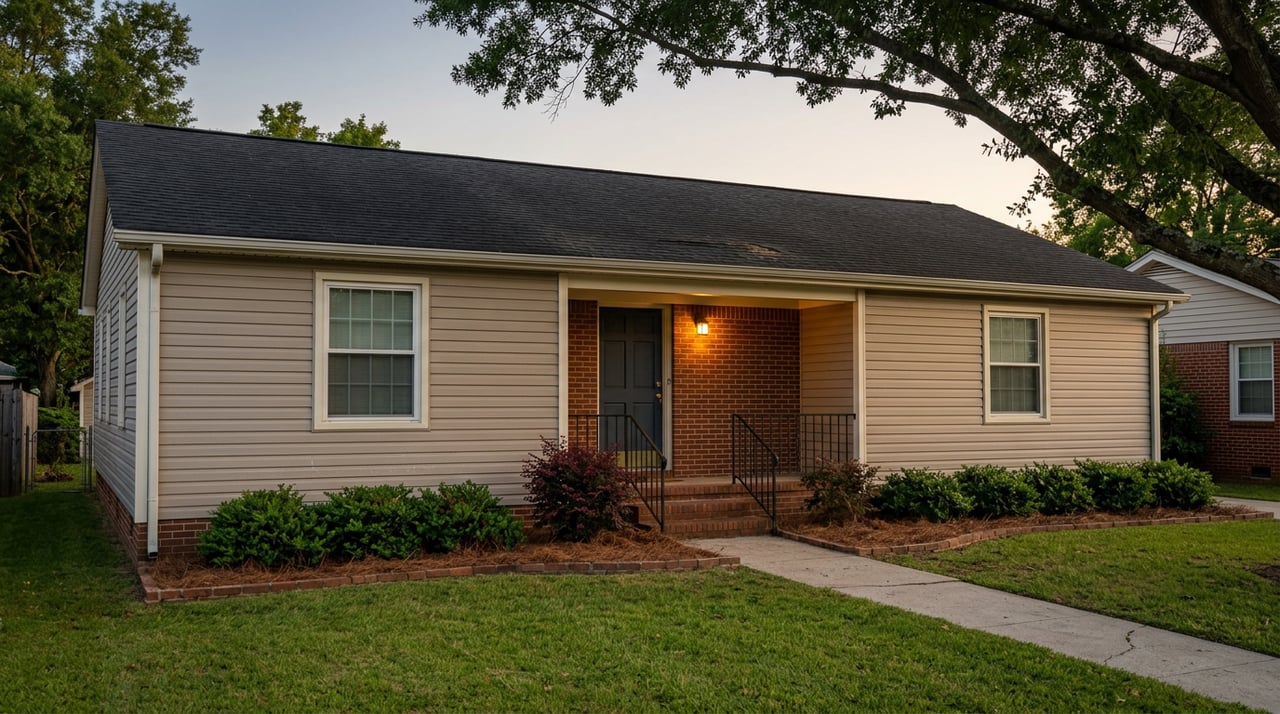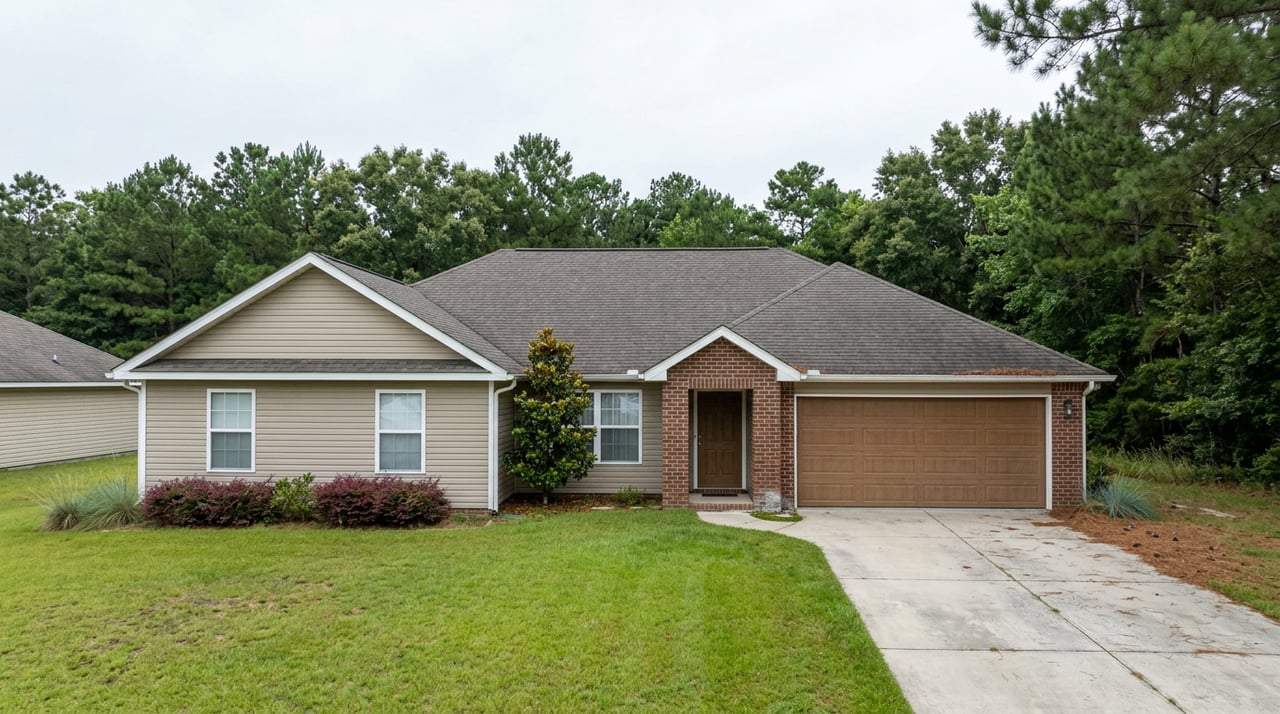
A developer named Belmont Homes bought twenty lots in Franklin County and did what a builder is supposed to do. The company pulled permits, staged the project, and pre-purchased some of the water meters it needed to bring those lots online. Then the county's water crisis caught up with the calendar. By November 2025, Franklin County had extended its moratorium on new water meter sales again, and Belmont Homes could not get the rest of the meters it had already budgeted for. Its attorney, Beau Kay, told commissioners his client had purchased the acreage on the strength of the county's assurances and now intended to file suit.
That dispute is the clearest illustration of a fact that never shows up in an MLS listing or a per-acre comparison spreadsheet: in Franklin County right now, owning land and being allowed to put a house on it are two different things, and the gap between them is a county water system running short.
Why a Cheap Acre Isn't the Same as a Buildable One
Franklin County has always been one of the more affordable corners of Northeast Georgia, and that reputation still holds. But affordability calculated on price per acre assumes you can eventually connect a house to water. Since May 2025, that assumption has not been safe to make for anyone without a building permit issued before the shortage began.
The county's water tank hit a 14-foot level over a weekend in April 2025, a number county staff flagged as dangerously low. Around the same time, the City of Toccoa, one of Franklin County's water suppliers, reduced the amount it was willing to sell the county. Faced with both a shrinking supply and drier-than-normal conditions, the Board of Commissioners voted to stop selling new water meters starting June 1, 2025. What began as a 90-day emergency measure has been extended repeatedly since, and as of a May 2026 vote it had run for close to a year.
How the County Got Here, in Order
The timeline matters because it shows this was not a single bad season. It was a slow squeeze from several directions at once.
- April 2025 – The county's water tank dropped to a 14-foot level over a weekend, a level County Manager Terry Harris flagged as a warning sign.
- May 2025 – The City of Toccoa cut the volume of water it sells to Franklin County. The Board of Commissioners imposed a 90-day moratorium on new water meter sales, effective June 1.
- July 2025 – Harris asked for an extension. Of three test wells drilled that summer, two came back unusable.
- October 2025 – A well the county hoped would help tested positive for E. coli. A well in neighboring Madison County that Franklin had been drawing from also showed declining levels.
- November 2025 – Commissioners voted 5-0 to extend the moratorium again, this time with a carve-out allowing anyone who held a building permit before June 1 to still get a meter. That carve-out is what put Belmont Homes at odds with the county.
- May 2026 – The moratorium was extended a fourth time, described at that point as running close to a full year.
- June 30, 2026 – The county reported testing roughly 200 gallons per minute of capacity available from Madison County and said 40 to 45 applicants remained on the waiting list. A commissioner made a motion to begin releasing the moratorium.
- September 2026 – The Franklin County Citizen Leader reported commissioners were still circulating a survey asking residents for questions and concerns about the county's ongoing well study.
That last point matters more than it looks. A motion to release the moratorium in June does not mean the moratorium is gone. Public reporting as of this month still shows the county actively gathering input on its water search, which tells you the situation was fluid rather than resolved when this was written.
The Fairness Fight Inside the Moratorium
The carve-out for prior permit holders sounds like a reasonable compromise, and for people who already had permits in hand, it was. But it created a second-tier system inside the county's own water rules. Commissioner Cory Pulliam said plainly at the November 2025 meeting that he didn't think it was fair for a select few to get meters while everyone else on the list waited. County Attorney Bubba Samuels defended the carve-out as the only way to avoid stranding builders mid-project, and Commission Chair Courtney Long pointed out that some of those builders were, in her words, stuck in limbo with projects they couldn't finish.
At the county's June 30, 2026 work session, County Manager Terry Harris put the number of applicants still waiting at 40 to 45, more than a year after the moratorium began.
That number is the practical takeaway for a buyer. It is not a hypothetical risk. It is a documented backlog of real people whose land purchases and building plans have been sitting on a list.
What This Actually Changes If You're Comparing Counties
Buyers looking at Northeast Georgia acreage naturally start with price per acre across Franklin, Madison, Elbert and Oglethorpe counties, because that's the number the listing gives you. But price per acre only tells you what the dirt costs. It says nothing about whether the county selling you that dirt can also sell you the water to build on it.
In Franklin County specifically, that second question has had a documented, changing answer for well over a year. A lot inside Lavonia, Royston, or Carnesville city limits may draw from an independent municipal system with different capacity than the county system. A lot served by the county water system, particularly in unincorporated areas, has been subject to the moratorium and its carve-outs. Two parcels that look identical on paper, both zoned for a single-family home, both a similar distance from Highway 17, can sit on opposite sides of that line.
This is the kind of detail that never appears in a comparative market analysis built off closed sales. It only shows up if you ask the right question before you write an offer, not after.
Before You Write an Offer on Franklin County Land
If you're seriously considering a vacant lot or new construction anywhere in the county, a few calls before closing will tell you more than any per-acre comparison:
- Call the Franklin County Water Department directly and ask, in writing, whether a meter is currently available for the specific parcel, not the county in general.
- Confirm whether the property falls inside Lavonia, Royston, Carnesville, Canon, or Franklin Springs city limits, since those systems have operated separately from the county's moratorium.
- Ask the seller or listing agent whether a building permit was issued before June 1, 2025, since that date has determined who qualifies for the carve-out.
- If a well is the fallback plan, ask what the county's own test wells turned up nearby. Two of three tested unusable in mid-2025, and one came back contaminated with E. coli that fall.
- Build a buffer into your timeline. A backlog of 40 to 45 applicants as of mid-2026 means "we'll get a meter eventually" is not the same as "we'll get one before your construction loan matures."
None of this makes Franklin County a bad place to buy. It makes it a place where the due diligence has to go one layer deeper than the listing sheet, and that's exactly the kind of layer a local, education-first approach exists to catch before it becomes a closing-day surprise.
Frequently Asked Questions
Does the moratorium affect homes that already have water service? No. The moratorium applies to the sale of new meters, not to disconnecting or restricting existing customers. A resale home already connected to county water is not affected the way a vacant lot or new build would be.
Can I just drill a private well instead of waiting on a county meter? You can apply to, but the county's own search for new well sites has been slow going. Engineers identified favorable zones, but as of mid-2026 that work still required property owners to allow drilling at their own expense, and at least one previously promising well tested positive for E. coli.
Is this only a problem in unincorporated parts of the county? Largely, yes. The moratorium and its carve-outs have centered on the Franklin County Water System. Properties served by an independent city system, such as Lavonia's, have been the subject of separate infrastructure projects rather than the countywide moratorium, which is one more reason to confirm which system actually serves a specific parcel before you commit to it.
If you're weighing land or new construction anywhere between Lavonia and Carnesville, this is exactly the kind of local detail worth a conversation before it's a contingency. Homes with HP works Franklin County closely enough to know which questions to ask the county on your behalf. Book your white-glove consultation and let's find out what a specific parcel can actually support before you write the offer.